You are here:

Coal Seam Gas (CSG) wastewater treatment is not standard industrial effluent. Produced water from coal seam gas operations contains dissolved hydrocarbons, residual oils, and high salinity, and the volumes change over the life of a well. That variability affects treatment design, chemical dosing, and system sizing at every stage.

Generic mining or industrial treatment systems don’t account for those characteristics. A workshop interceptor isn’t designed for dissolved hydrocarbons. A clarifier alone can’t manage salinity or variable produced water loads. Getting compliance right on a CSG site requires a system built around what’s actually coming out of the ground.

Why CSG Wastewater Requires Specialist Treatment

Mining wastewater is dominated by suspended solids and oils. CSG produced water introduces dissolved hydrocarbons, elevated salinity, and trace metals; often at volumes and concentrations that change as the well matures.

Standard mining treatment falls short for three reasons. Workshop interceptors aren’t designed to handle dissolved hydrocarbons or the variable flows typical of onshore gas facilities. Clarifiers alone can’t address salinity or dissolved contaminants, which drive downstream treatment requirements. The compliance environment is also stricter: large or variable discharge volumes, proximity to sensitive aquifers, and reuse or reinjection readiness all raise the regulatory bar above what standard mining systems are built for.

How Coal Seam Gas Wastewater Treatment Works

Effective treatment follows a staged approach, with each stage protecting the next. Upstream oil-water separation removes free oils and conditions the load before it reaches primary treatment. Clarification reduces suspended solids and residual hydrocarbons, providing a consistent feed to polishing. Chemical treatment and polishing stages address dissolved salts and remaining contaminants to meet discharge, reuse, or reinjection standards.

Each stage matters. Skipping or undersizing upstream separation puts load on polishing systems they were never designed to handle. Staged treatment is what makes compliance achievable when conditions vary.

Compliance and Environmental Obligations

CSG operations face tighter regulatory scrutiny than most industrial effluent sources. Onshore gas facilities are often near sensitive aquifers, so produced water quality has to be tightly controlled at all times. Water destined for reinjection or beneficial reuse must meet stringent standards that go well beyond standard trade waste limits.

Contaminant profiles and flow rates change over the life of a well. Compliance is not a fixed target. Treatment systems need to be monitored, adjusted, and capable of handling both formation water and flowback water as conditions evolve. Continuous monitoring and adaptive management are what sustained compliance requires on these sites.

Large,Thermal,Kingston,Power,Plant,In,Roane,County,Near,Kingston,

How Baldwin Approaches CSG Sites

Baldwin starts with a detailed site assessment covering produced water characteristics, flow variability, salinity profile, and environmental sensitivity. Nothing is specified until that picture is clear.

From there, Baldwin designs and builds a staged treatment system around the actual requirements: oil-water separation, clarification, dissolved air flotation, filtration and polishing, or combinations of these depending on what the water requires. Ongoing support after commissioning keeps the system performing as well conditions change.

Frequently Asked Questions

What makes CSG wastewater different from standard industrial wastewater?

CSG produced water contains dissolved hydrocarbons, high salinity, and trace metals alongside suspended solids and oils. Standard industrial treatment systems are designed for solids and free oils and don’t account for dissolved constituents or the salinity levels common in produced water. The volume and chemistry of CSG wastewater also change over the life of the well, which adds a layer of variability that generic systems aren’t built to handle.

Can standard mining wastewater treatment systems be used on CSG sites?

Generally not without modification. Mining treatment systems are designed for suspended solids and oil-dominated wastewater. CSG produced water introduces dissolved hydrocarbons and elevated salinity that drive different treatment requirements, particularly at the polishing stage. Adapting a mining system without accounting for those differences typically results in compliance failure downstream.

What discharge standards apply to CSG wastewater in Australia?

CSG sites operate under environmental authority conditions set by state regulators. In Queensland, this falls under the Environmental Protection Act and associated water management frameworks. Produced water destined for reinjection, irrigation reuse, or discharge to receiving environments must meet water quality standards specific to that end use. Requirements vary by state and site classification. Proximity to groundwater and sensitive ecosystems typically attracts additional scrutiny.

How does Baldwin size a treatment system for variable produced water volumes?

System sizing is based on peak and average flow rates, not just design-point estimates. Baldwin’s assessment process characterises flow variability across the expected production lifecycle, which informs hydraulic capacity, retention times, and chemical dosing ranges. The goal is a system that maintains compliance at both low and peak flow conditions, not just under steady-state assumptions.

What ongoing support does Baldwin provide after commissioning?

Baldwin provides operational support, monitoring, and system optimisation after commissioning. As well conditions change and produced water characteristics evolve, treatment parameters may need adjustment. Baldwin’s ongoing involvement ensures the system continues to perform against compliance targets over the life of the operation.

Industrial Wastewater Treatment Resources

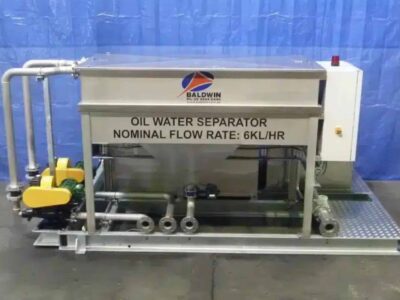
Compact coalescing plate oil water separator for efficient oil and water separation in small-scale operations

Wastewater Treatment Products

Treatment systems and components by application

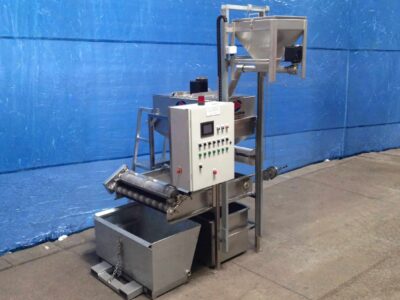
Control panels installed on an industrial wastewater treatment system in Sydney

Wastewater Treatment Technologies

The treatment technologies Baldwin applies by process and application

Custom industrial wastewater treatment system designed and fabricated by Baldwin Industrial Systems

Case
Studies

Examples of Baldwin systems across industrial sites